
Artificial Grass Buying Guide
Artificial grass has been around since the 70’s, although you’d be forgiven for thinking it looked cheap with their shallow pile length and plastic-looking, luminous green blades when it was first introduced. In the last decade in particular, we’ve seen significant advancements in the production of artificial grass, with new materials paving the way for ultra-realistic grass blades and long life spans.
Why Choose Artificial Grass?
Striving for a perfect lawn can be hugely time consuming; with weeds and moss becoming a common nuisance if they’re not kept on top of regularly. Even if you do spend a lot of time on keeping your lawn tidy, the extremities of the Great British weather will play havoc with how healthy your lawn looks. Here’s just some of the advantages of artificial grass:
- Maintenance-free – As artificial grass is plastic, there’s no need to water or feed it. This also means it doesn’t grow, so you can make some space in your shed by getting rid of the lawnmower!
- Durable – The surface is made from hard-wearing plastic, so you’ll never be left with bare patches from walking on it.
- Long lifespan – Modern materials have allowed artificial grass to last must longer than early versions. Flooring Direct’s range comes with a 5 year UV guarantee to protect from fading, but you can expect it to last far beyond the warranty period.
- Easy to clean – Artificial grass can be cleaned with water or mild disinfectant; which makes it great for kids and pets.
Choosing Where to Lay Your Artificial Grass
Another fantastic benefit of artificial lawn is that it can be installed on practically any type of surface. So, on areas such as concrete and and wooden decking where traditional turf couldn’t be laid, artificial grass can! Although you must be careful – whilst artificial grass isn’t flammable – you must keep it away from barbeques, fire pits and chimineas to prevent it from shrinking or melting.
Which pile height to choose?
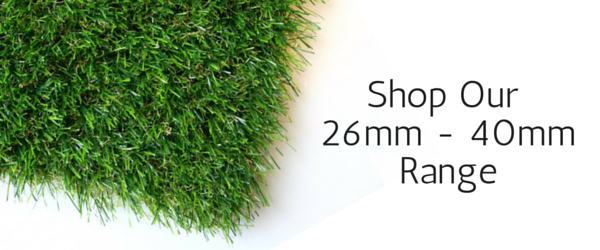
When designing your new outdoor space, deciding which pile height to go for should come down to more than just preference. If you’re looking to create a lawn, you should consider artificial grass with a pile height of at least 26mm. This will achieve a realistic and and natural look – something that lower pile heights can struggle to achieve.
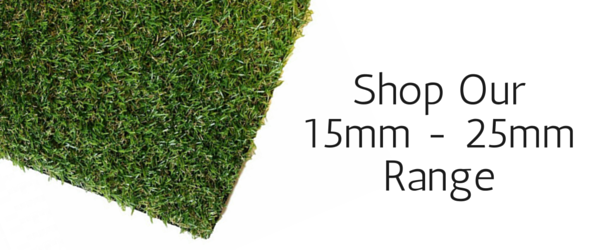
Mid-range artificial lawn with a pile height of between 15mm and 25mm is the perfect choice for landscaping. Whilst products in this range may not always offer the most realistic appearance, they give the effect of a perfectly trimmed lawn all year round.
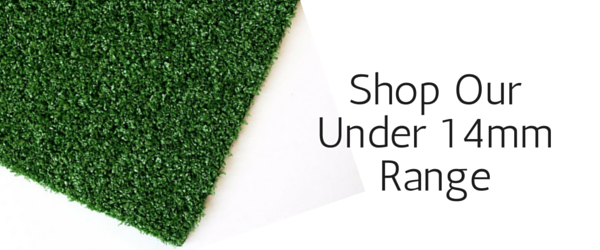
So you’re probably left thinking, if the mid-range collection doesn’t always achieve a realistic look, then what hope does the lower range have? Well, installing thick pile artificial grass is not always practical – especially if you have plenty of garden furniture and accessories to move around. A shorter, more dense product like those in our ‘under 14mm’ range will mean heavy items such as tables and chairs won’t leave indents in the surface. Shorter artificial grass is also lighter in weight generally, so can be an advantage when weight bearing is a problem – such as on roof terraces.
Selecting Width
Although selecting the width of the product shouldn’t be a hard decision, since it’s determined by the dimensions of the space you’re covering, you should be aware that artificial grass is directional. This means that if you don’t run the rolls in the same direction, the finishes results won’t be as impressive.
Comments are closed here.